TravelTube.com Podcast
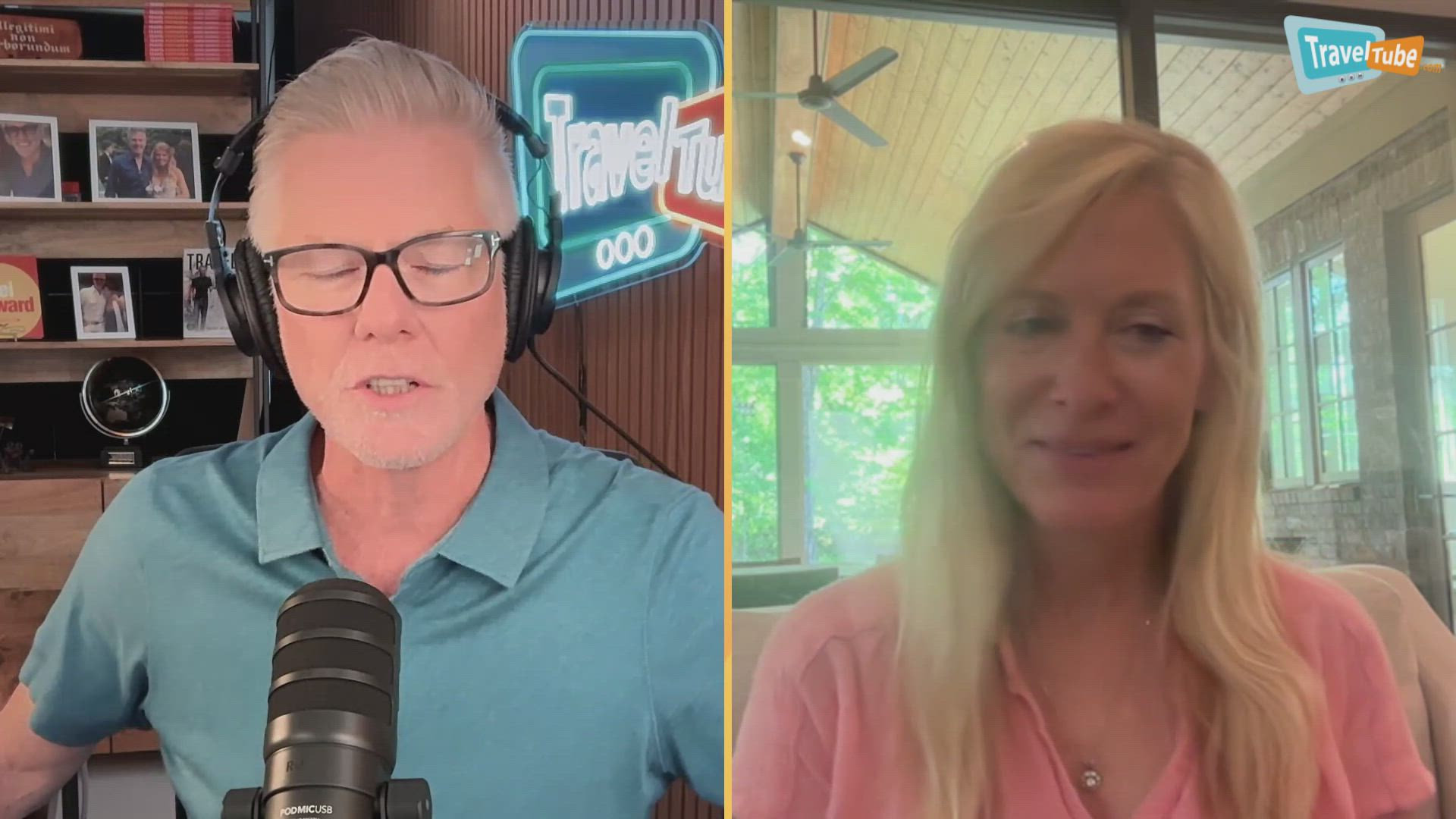
Guest: Peter Liciaga | Host: Mark Murphy
Mark Murphy:
Hey folks, Mark Murphy with TravelTube.com — the travel expert channel. Even though we focus on travel experts and travel agents, I always find it interesting to bring on someone from outside of travel who can help support those selling travel. That brings me to Peter Liciaga. I've known Peter since around 2003, and I've always had a great deal of respect for this guy. I'm going to let him share his path and something he's doing that I think many of you will be interested in joining. So let me bring him on. Peter, welcome to TravelTube.com!
Peter Liciaga:
I'm excited to be here — thank you for having me. And congrats on all of this!
Mark Murphy:
You know what? When you get retired and your non-compete runs out, you get to start some new fun stuff. This is one of my ways of giving back to the industry — aggregating travel experts in one place and giving them content from their peers that doesn't show up anywhere else. And I think you're doing something similar with the community you're building called the Living Strong Community, which I've recently joined. It provides constant insights and positivity. Give us a quick background, and then we'll get into the community and some of the things you're doing today.
Peter Liciaga:
Absolutely. I started off in the Bronx — survived the Bronx — then traveled down to Florida, got the street out of me, and got into classical ballet. I went back to New York and joined the Long Island Ballet Company. From there, a friend introduced me to Broadway auditions, and I worked on Broadway for many years, traveling the world as a performing artist. I met my wife, and we got married in '86. We toured doing shows with Andrew Lloyd Webber — a lot of West Side Story and other productions. Then I decided to settle down and start a family. We came back to New Jersey around '98, started a family in 2000, and I decided I didn't want to travel as a performing artist anymore. So we opened a karate school — I partnered with Michael Donato in '98 — and I've been teaching martial arts ever since. That's grown into a franchise now. At a certain point I stepped back from teaching daily classes, and that's when I decided to create something new called Living Strong. The concept grew out of a ten-year journey of losing mobility in my hips, getting it back, and realizing how many people are struggling mentally and physically. I wanted to bring the idea that you're always in great shape for the shape you're in, and that you're never too broken, beat, old, or bruised to live strong.
Mark Murphy:
You've been out in a big way with this, and I've followed you for years. As a side note, my son started karate at your school around 2002 or 2003 when he was about five or six. Peter actually did some one-on-one training with him in high school — right up until he broke his kneecap skateboarding. I believe he had reached second-degree black belt at the time. By high school I realized he could probably kick my butt, though I don't think he knew it mentally back then! You were always such a positive influence on the kids. I know this community is going to be the same. Let's talk about your book — it came out last summer, right? What are some of the key takeaways?
Peter Liciaga:
I wrote a book called Living Strong: The Power of Defining Moments. I wrote it during a time when I couldn't move and had to make sense of my life. I felt disconnected — I had been a full-time instructor teaching 40 classes a week, and then I stepped out of that role. I felt like I wasn't contributing anymore. So I spent a lot of time reflecting and started writing down lessons I'd learned over my life. What I found was that it wasn't the high points that taught me the most — it was the low points. Those were the defining moments. The book covers my life from growing up on the streets of New York as a gang member, to how I got out, became a ballet dancer, experienced business losses, and what I gained from all of it. When people read it, the goal is that they'll ask themselves, 'I can relate to that.' I always tell people — I don't want reviews, I just want to hear what you got from it. That feedback helped me plant the seed for Living Strong Projects, taking this message out to the broader community. The book is short and an easy read by design — my original manuscript had all the positive psychology research woven in, and I stripped that out to make it accessible. My hope is that someone reads it and asks themselves: Am I living strong — mentally, emotionally, physically — and how am I contributing and being useful in my community?
Mark Murphy:
It's a powerful story. Being part of a gang — that was essentially a survival mechanism based on where you were living, right?
Peter Liciaga:
Without question. That was my entire mindset. What got me out was asking a friend if I could stay with them. I knew I had to get out of New York — I thought I was going to die there. She gave me money, I got on a bus at Port Authority, and 36 hours later I arrived in Fort Pierce, Florida. I remember thinking the whole world was projects. But after passing Newark — which honestly looked worse to me at the time — there were 30-plus hours of open land, and that planted the seed for me to travel. When I became a performing artist I traveled all over the United States, Canada, Japan, all over Europe. It just opened my eyes, my mind, my heart. I saw that there was an exciting world out there beyond the streets.
Mark Murphy:
That's such a great message to bring back to people who are in that situation today — people who think this is all there is. Our education systems have failed a lot of inner-city kids. You can graduate high school with only a fraction of the class reading at grade level, and then government-backed loans happily send you to college where you're set up to fail again, and suddenly you're in a dead-end job hoping to hit the lottery. That's why it's so critical that people like you get platforms to speak. I was raised in a family of seven kids — four of us within five years. When you're competing at that level at home, you transfer that competitiveness into work. I got into sales because it was merit-based. It didn't matter what color your skin was or how you were raised — you either delivered revenue or you didn't. What was it that brought you specifically to Fort Pierce?
Peter Liciaga:
Family. My sister left New York when she was 16 — she was in a lot of trouble and went to live with our grandfather, Grandpa John, in Florida. She got her life back together down there. I reached out to her and said I had to get out, and she welcomed me. I talk about Grandpa John in my book — he lived to 98, phenomenal man. I stayed in Fort Pierce for about seven years before going back to New York and jumping into the ballet world. Now I do a lot of community work — speaking to kids in group homes, going into schools, working with local businesses. A lot of young people have no idea how to communicate, how to create value in a product or service, or how to think about their financial future. We have to train them on all of that. Even college graduates don't come in knowing how to make someone see the value in what they're offering. None of this is taught. What we look for when hiring is simple: passion for what you do, love of people, and the gift of gab. Everything else we can train.
Mark Murphy:
That's such an important point. There's a word that's almost the opposite of merit — entitlement. A lot of people believe that if you're successful, you owe them something. We bootstrapped our business from nothing, and as it took off, you'd add employees and everyone wanted raises. You reward people because if you don't pay them well, they leave. But I've never once had an employee come to me during a downturn and say, 'Hey, things are tight — I'll take a 10% cut this year.' That never happens. And I understand — I get it. But that's the other side of the coin. When you're a successful business owner and you exit, nobody else took that risk. Nobody else was riding in the same boat.
Peter Liciaga:
Absolutely. And that risk is real. When I stopped being the one teaching 40 classes a week, revenues dropped. I was only one person, but the ideas — everything — came out of my head. That's the thing people don't see.
Mark Murphy:
Exactly. And what's wonderful for me is seeing people who came in at entry level — straight from college, from different jobs — and watching them grow. There was a woman who was literally making egg sandwiches at the café downstairs from one of our offices. One day we said, hey, you should talk to us about a job. She came in, got hired, and when I last checked she was well into six figures as a project manager at a large company — no college degree. Just an incredible work ethic and always willing to take on more. Tori, I'm talking about you — I hope you're still doing great, because that's what fuels me. That's what I love to see. And I love seeing travel agents grinding it out right now. This week with everything happening in Mexico — one of the top destinations — I can't imagine the calls they're fielding. But they're the heroes. They have the relationships, they have the trust of the consumer and the supplier, and they'll work it out. Snowstorms, geopolitics, natural disasters — it's nonstop for these folks. And a lot of times they don't even get a thank you.
Peter Liciaga:
Yes — and that's exactly what I love about what you're building here. Even if you impact just a handful of people, the exponential effect is enormous. That person goes out and impacts others, and so on. I've seen this firsthand in our martial arts school.
Mark Murphy:
Give me an example. Who's someone you're really proud of?
Peter Liciaga:
Number one: our head instructor, Colin McGill. Colin started with us when he was three years old. We trained him up. He went to Sarah Lawrence for four years and would come work with us on weekends and summers. During the pandemic — his final year of college — he couldn't graduate in person. That's when we offered him an opportunity to come on board and teach. He partnered with Master Donato and me and worked incredibly hard. He survived a tough apprenticeship and is now the head instructor and owner of our school — at 27 years old. We handed him the keys to something we'd built, and he's growing it. That's the whole theory at work: if we do this right, teach these young people, it will change their lives. Master McGill is proof. I also have the chance to speak at schools, group homes, and senior facilities. Just last Friday I did a Living Strong presentation for residents aged 80 to 97. A young staff member came up to me afterward — 'Master Liciaga, don't you remember me? I was one of your students.' That happens to me almost daily around Mount Laurel. And one of the things that drives me is knowing a single person who plants a seed can change a life. Sister Elizabeth, a teacher at my Catholic school, told me I was great with words. Because of her I considered writing. There are people in all of our lives who planted seeds in us. I go into schools and tell struggling teachers: you may never see the results, but trust that someone out there is that one person who will be changed by what you do. I'm that one person for several people in my life.
Mark Murphy:
That's beautifully said. All right, let's get into the community itself. It's called the Living Strong Community, hosted on the Skool platform — S-K-O-O-L. Tell us about the two membership tiers: free vs. premium.
Peter Liciaga:
The free tier lets you join the community wall, read what I share and what others post, and make comments. It's a great way to get a feel for things. The premium tier is about $23 a month — or $25 a month billed annually — and it unlocks a full classroom environment. I have modules in there that go deep on what it means to live strong mentally, emotionally, and physically. The core idea is: learn, then practice, then get creative when challenges come. It's not enough to know — you have to apply it. Right now I have a module on clarity: being clear on your vision, knowing your skill sets, understanding how you're serving your community, and honestly assessing whether you're living the life you hoped for. If not, let's work toward that together. For business owners like travel agents, the mindset tools are practical. Whenever I face a challenge, I ask three questions: What can I do to make things better? What can I do to avoid making them worse? And what do I need to know that I don't know yet? Two people can look at the same problem — one complains, the other asks how to move forward. That forward motion is what I call the Living Strong mindset, and it comes from a deep dive into positive psychology and growth mindset research.
Mark Murphy:
Love it. So for anyone out there looking for consistent insights and positivity from someone who has actually traveled the road he speaks of — Master Liciaga is your guy. What's the easiest way to find the community?
Peter Liciaga:
Livingstrongtribe.com.
Mark Murphy:
Livingstrongtribe.com — we'll put that in all the clips. If you're a travel professional, you can't go wrong joining this community. It's less than a dollar a day for the premium tier, and as you've heard today, this man has an incredible amount of wisdom to share. He trained my son one-on-one for years, and it was a total no-brainer. Peter, thank you again so much.
Peter Liciaga:
My pleasure — all the best!
Mark Murphy:
Thanks everyone for joining me here on TravelTube.com. Follow us on your favorite podcast app and on social media. Until nex